Prepare for the Match You Will Actually Enter
Your first Jiu-Jitsu tournament involves decisions that ordinary class does not: entering the correct division, passing uniform inspection, making weight in the required clothing, and responding when your match is called. Sorting those details out gives you more attention for the part you came for: competing.
At Gracie Barra Rancho Cucamonga, bring us the event name before registering so we can discuss your preparation. These five tips focus on a first gi competition. Your organizer’s current rules govern the event; IBJJF requirements below are identified as examples, not rules for every tournament.
DISCOVER Gracie Barra Rancho Cucamonga
CLICK HERE1. Confirm the Division and Rules Before Paying
Before entering a Jiu-Jitsu tournament, check gi versus no-gi, age group, belt rank, weight category, and any experience requirements. Do not assume a division labeled “beginner” means the same thing across organizers. For IBJJF events, membership must reflect your current belt and school, and age divisions use birth year. Other events may use a different registration process.
Read the correction deadline while you still have time to fix an entry. The IBJJF’s first-championship checklist explains its registration and division process. Keep the confirmation and review the published athlete list; a paid receipt does not tell you whether you selected the right category.
Then ask your coach which submissions and grips are legal for your division, how long the match lasts, and how points and penalties work. A move allowed in one training round may be prohibited in your competition category. Know those differences before competition preparation becomes a series of hard rounds.
2. Test the Actual Gi and Weigh-In Setup
Rehearse the weigh-in wearing what the organizer requires, not just the clothes you normally use on a bathroom scale. IBJJF’s listed limits include the uniform. A reading without your gi and belt can therefore give you the wrong picture. If you are close to the limit, discuss the category before the correction deadline rather than assuming the event scale will round down.
Put on the exact gi you plan to compete in and ask your instructor to inspect it. Check sleeve and pant length, patch placement, condition, and the organizer’s current material requirements. Washing can change the fit, so check it after laundering rather than relying on how it fitted when new.
The IBJJF uniform requirements and linked updates show why a gi that works in class may still need attention before inspection. If you bring a spare, check that one too. Pack the required ID and belt together with your competition gi, so nothing essential stays in another training bag.
3. Rehearse Your Opening With Your Coach
For your first Jiu-Jitsu tournament, build around positions you already practice. Adding several unfamiliar moves in the final week gives you more decisions to make under pressure. At Gracie Barra Rancho Cucamonga, ask which of our current class options fits the preparation you need; do not assume every session has the same purpose.
Start Practice Rounds on Your Feet
If your rounds usually begin seated, ask to rehearse the standing start under supervision. Decide with your coach which opening grip and familiar entry you will look for, and what to do if that first option is blocked. Our discussion of becoming more comfortable with standing exchanges addresses one common source of hesitation.
Also choose a clear next task from top and bottom. For example, your coach might prioritize establishing a familiar passing position on top or recovering a guard you recognize underneath. That is more usable than telling yourself to “be aggressive” for the entire match.
Practice the Clock, Score, and Coach’s Voice
Run supervised rounds using your division’s match duration. Ask your coach to give you a score situation: ahead with little time left, or behind and needing to act. Discuss what would actually score from that position instead of assuming movement alone earns points.
Agree on a few short cues you recognize. If your hands tire because you squeeze every grip, address that during practice; our common white belt habits include the tendency to grip too hard. Rehearse responding to referee stoppages, and tap promptly when caught rather than waiting for pain.
4. Know the Call Procedure Before You Warm Up
Locate the athlete waiting area, uniform inspection, and weigh-in station as soon as you arrive. Ask staff how your division will be called and which official screen or desk to monitor. Knowing your mat number is useful, but it does not replace checking whether you have been summoned to the waiting area.
Follow the specific event’s arrival and reporting instructions. The IBJJF championship guidance distinguishes an estimated match time from being ready beforehand. Do not arrive at the building at the moment your bracket is expected to start.
Agree on a brief warm-up with your coach and keep checking the call system. Avoid doing repeated hard rounds while waiting; you want to reach the mat prepared, not already worn out. After a win, check the next match before leaving the athlete area or changing clothes.
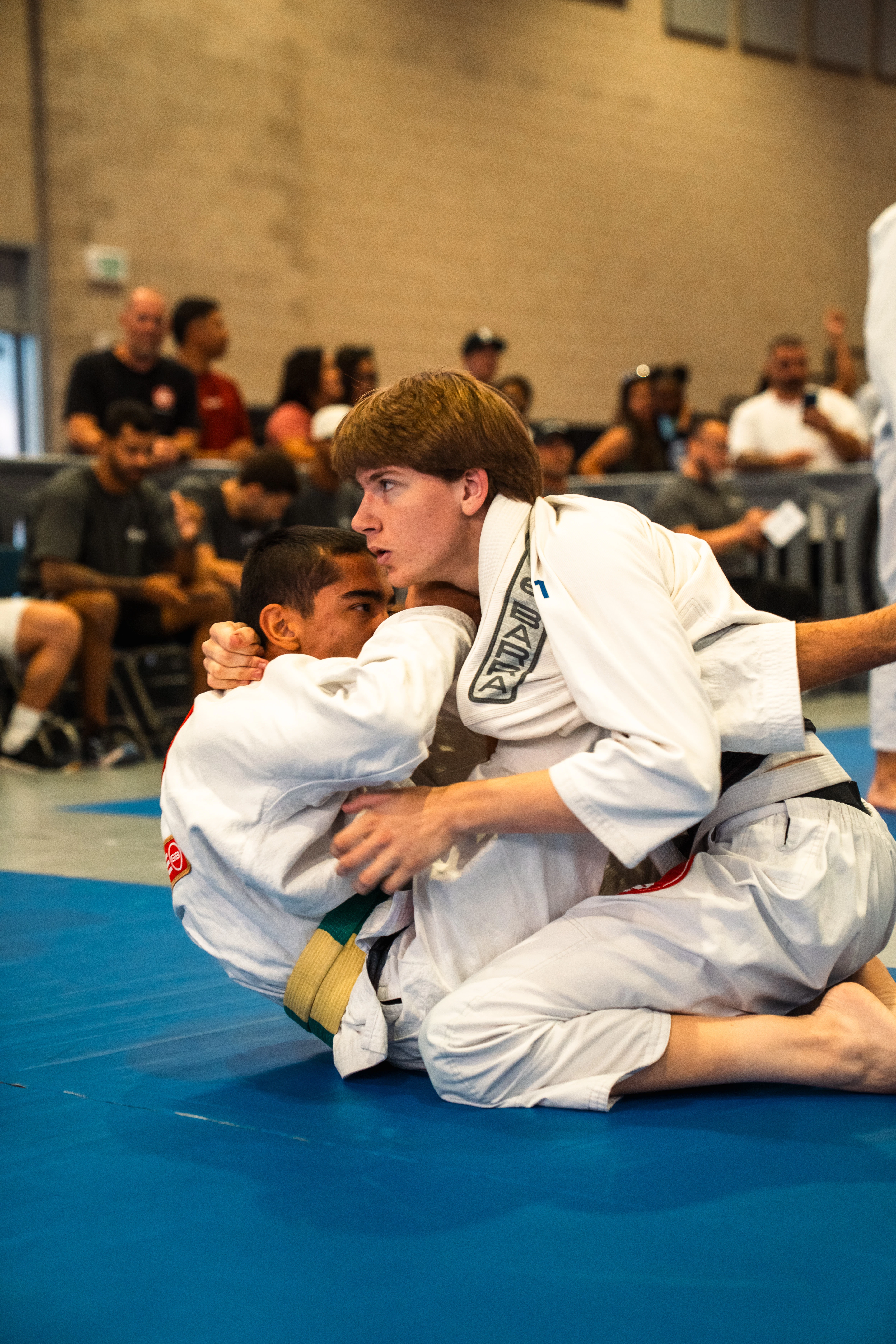
5. Turn the Match Into One Specific Training Goal
After your first Jiu-Jitsu tournament, review the first meaningful exchange with your coach. Where did you get the grip you wanted, lose position, or miss an instruction? If event rules allowed recording, use the footage to identify that moment instead of relying only on how the match felt.
Choose one position to revisit in class: a guard you could not recover, a passing situation you stalled in, or a standing exchange you had not rehearsed enough. This keeps competition preparation useful after the event. A win still deserves review, and a loss can give you a precise starting point for the next session.
DISCOVER Gracie Barra Rancho Cucamonga
CLICK HEREBring Your Event Details to the Mats
A first Jiu-Jitsu tournament becomes easier to prepare for when you connect the paperwork to the match itself: correct division, checked equipment, a familiar opening, and a clear reporting routine. You do not need a completely new game to compete; you need to understand how to use the skills you already train.
Considering an event? Contact us to discuss your first competition at Gracie Barra Rancho Cucamonga. Share its date and rules so we can talk about the next steps in your preparation.